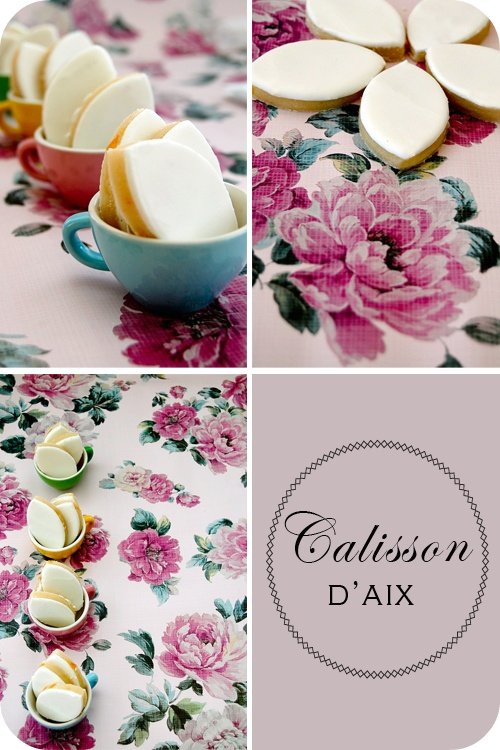
Calisson single

You feel you are there with them.  Peter Mayle and his wife in Luberon, Provence, in the vivid, light-hearted autobiographical story, A Year in Provence.  Before the end of the first page, I was utterly charmed.  You are transported to the south of France, and share the adventures of a year, with Peter and his wife, in this striking part of the world.  I close my eyes and instantly see every inch of detail described.  From the 200 year old stone farmhouse the author bought, the grape vines on his property, his charming and sometimes unconventional neighbours, the clandestine tricks of the locals during truffle hunting, the dramatic changes in weather, and the endless food and gastronomic meals.

Peter speaks of a visit to Aix, and colourfully illustrates his observations the local student population.  The entertaining performance of the arrival, greeting and the ritual kissing of the students.  I read with a smile on my face, as I can picture each move.  Then my eyes wander to an illustration in the book.  A young girl sitting in a café, with the obligatory glass of Pastis, joined at the table by a box of Calisson d’Aix.

Calisson d’Aix is a speciality of Aix-en-Provence.  A tiny diamond shaped sweet, made with ground almonds and candied fruits and finished with white royal icing.  They are traditionally served with coffee after dessert.  Admittedly, I have been enjoying any time of day, and believe they would be a delightful addition to any holiday season table.  The addition of orange flavoured liqueur to the almond candied fruit mixture, is simply festive.Calisson set2

They are very simple to make, and a perfect make-ahead sweet.  The almond mixture comes together quickly, and then dries overnight.  The royal icing is then applied and allowed to set.  Lastly, the sweets are cut into the distinctive diamond/petal shapes.

My baking provisions regrettably do not contain such a distinctive shape.  Some recipes suggest cutting by hand yet I lack a steady hand so that was off the cards.  After a few moments staring at my supplies, I had a vision.  I immediately picked up a round cookie cutter with the visualisation of a Venn diagram in my head.  (Bravo my statistics degree is finally paying dividends towards my baking!)

I simply used each side of the round cookie cutter to mimic a diamond/petal shape.  Too simple for words – and no new shape required.  See ‘both A + B’ attached if you are unfamiliar with the Venn diagram.

I noticed many recipes included a candied melon that I was having much difficulty in obtaining.  So I was happy to find this version by Jacques Torres that omitted the melon, and included a healthy dose of Grand Marnier.

{ Calisson d’Aix } recipe courtesy Jacques Torres

* Ingredients *
1 pound plus 2 ounces (500 grams) almond paste
1/4 cup or 2 ounces (50 grams) candied orange peel
2 tablespoons (50 grams) fresh apricots puree or apricots jam
1 teaspoon honey
2 to 4 tablespoons (25 to 50 grams) Grand Marnier
Royal Icing, recipe follows

* Directions *
The candied orange I use is quite soft. You can candy your own or buy it in the store. If the one you buy is hard, rehydrate it in some sugar syrup.
Place the almond paste, candied orange, apricot puree, honey and Grand Marnier to the bowl of the stand mixer fitted with a paddle and mix until combined (you can also knead together by hand). You may need to adjust the amount of Grand Marnier depending on the texture of the paste. Roll out the almond paste mixture to 3/8-inch thick layer. I used some 3/8-inch thick rulers as guides so my almond paste would be rolled perfectly flat. You could use 2 wooden spoons. Let this sit overnight uncovered

Use an offset spatula to spread a 1/16-inch thick layer of Royal Icing on top of the rolled almond paste. Place this in the freezer until the Royal Icing sets, about 30 minutes, uncovered.

Use a sharp chef’s knife coated with vegetable cooking spray to cut the Calisson d’Aix into diamond shapes.

{ Royal Icing }

* Ingredients *
1 large egg white
1 1/2 cup powdered sugar
1/2 lemon, juiced and strained

* Directions *
Combine the egg white and powdered sugar in a medium-size mixing bowl and whip with an electric mixer on medium speed until opaque and shiny, about 5 minutes. Add the lemon juice and continue whipping until completely incorporated, about 3 minutes. The lemon juice whitens the royal icing. The royal icing should be light, fluffy, and slightly stiff. You may need to adjust the consistency by adding more egg whites if the icing is too dry or more powdered sugar if it is too wet.

Baba au rhum single

In my childhood home, back in the 1970s, a meal of spaghetti Bolognese was considered exotic.  This rare treat was due, in part, to post-war migration, and afforded the vast land of Australia some much needed diversity in culture!

I schooled with many first generation Australians – myself included - whose families heralded from a variety of European countries.  This first generation Australian was an ever ready participant to visit a friend’s home, to enjoy an afternoon snack (and embrace an array of new flavours along the way).

Since those days as a child, the gastronomic palate of Australia has bulged well beyond the last belt hole.  Cuisine from virtually every corner of the world is available.  From every continent, from every country, it seems a global aroma permeates all the major cities.

I suppose it is no surprise that the introduction of new tastes is common across all corners of the world.  In the 18th century, a variation of the baba au rhum was introduced into France (by way of Alsace-Lorraine), from Poland.  It is believed to be a descendent of the Kugelhopf.

This dessert, traditionally shaped like a Champagne cork, is a rich, yeast bread, baked in a cylindrical mould.  It is liberally (emphasis on liberally) soaked in a sweet rum syrup.  The more modern version includes dried fruit, but this recipe, by Julia Child, omits the fruit and showcases the simplicity of the original dessert.  The classic baba, as recommended by Julia, is finished simply with a few additional drops of rum, a brush of apricot preserve and a carefully topped glacéed cherry.  I opted for the extra rum and apricot but not the cherry.  Personal preference.

There are variations of this dessert with cream or fruit.  Each would serve as a lovely complement to the sweet rum laden bread.  This would be an ideal dessert to finish off a rich, hearty meal.  The rum syrup instantly cleanses the palate, and the hint of sweetness, from the rich bread and sugar syrup, provides a clear note to signal the end of the meal.

Baba au rhum set

{ Babas au Rhum } from Julia Child et al and Mastering the Art of French Cooking

Note: I baked the bread in a larger than recommended mould.  Typically the cylindrical baba mould holds about 100ml of fluid, and is roughly 5cm or 2 inches in diameter and depth – much narrower and smaller than the mould I used.

{ Pâte à baba et babas }

* Ingredients *
60g butter
10g dry active yeast
45ml tepid water
2 tablespoons sugar
1/8 teaspoon salt
2 large eggs
1 1/3 cups flour

* Directions *
Melt the butter and let cool.  Blend the yeast and water in the bowl with whisk and stand until yeast has dissolved completely.  Beat in the sugar, salt and eggs.  Mix the flour and the cool melted butter into the yeast with a wooden spoon.

Knead the dough by lifting it, slapping it, and pulling it vigorously against the sides of the bowl for about 5 minutes.  Alternatively, put into a mixer with a dough hook and mix until it starts to detach itself from the bowl.  Form into a ball and cut a cross deep on top.  Sprinkle with a little flour.  Cove the bowl and let rise in a warm place for 1 ½ to 2 hours or until the dough has doubled in bulk.

Butter the inside of your moulds.  Lightly break off about a tablespoon of dough, enough to fill a third of a cup, and press lightly into the bottom of the cup.  Place the cups, uncovered, again in a warm place and allow to rise 1 to 2 hours, or until the dough is over the rim of the cups.

As soon as the dough has risen the second time, bake in the upper third of a preheated 180C/375F oven for about 15 minutes.

{ Sugar syrup }

Both the babas and the rum syrup should be lukewarm but not hot before this operation begins.  If the babas are cold, warm slightly.

* Ingredients *
2 cups of water
1 cup sugar
½ cup dark rum (preferably Jamaican)

* Directions *
Bring the water and sugar to a boil.  Remove from the heat and stir until the sugar has dissolved.  When the sugar syrup has cooled to lukewarm, stir in the rum.  Arrange the babas in a dish, with their puffed tops up.  Prick tops in several places, pour the syrup over them and let stand for ½ hour basting frequently.  They should imbibe enough syrup so they are moist and spongy but still hold their shape.  Drain on rack for ½ hour.

After the babas have drained, sprinkle the top of each with a few drops of rum. Pain them with some apricot glaze/preserve, and place a cherry on top of each.

Makes 12 babas

Walnut Cake single

When I was young, a family friend had a macadamia nut tree in their yard.  Even though the macadamia is native to Australia, it is not common to have your own tree.  So it was a treat to occasionally come home with a handful of macadamia nuts after a visit.

Opening a macadamia nut, however, requires patience, persistence and most importantly, brut force – often necessitating a hammer, or some other blunt object, to crack open the stubborn shells.  The macadamia shell is a stark contrast to the softer shell of the walnut.

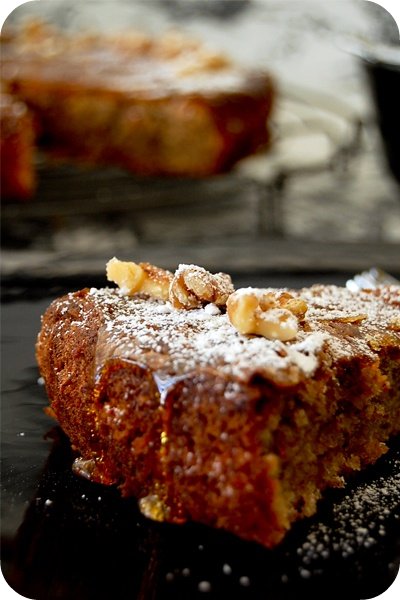
Majestic groves of walnut trees are common landscapes that grace the valleys of the Périgord region, in the southwest corner of France.  Walnuts feature strongly in cakes and desserts from this area, and this light, nutty Gâteau is one such example.

This recipe comes by way of French food authority, Anne Willan.  It is quick to put together.  And except for the last minute addition of caramel, can easily be made ahead.  It would be a very elegant dessert, and perfect for entertaining.

What a pleasure it would be to see the transformation of the humble walnut from the tree, into this not so humble cake.

On those lucky days as a child, returning home with a handful of macadamia nuts, there was no such dessert, cake or pastry created.  Though admittedly, I am not sure if there was adequate collective patience to crack sufficient nuts required for an entire cake!

Walnut Cake set

This was a very simple cake to bake.  Made easier with the introduction of a new attachment.

Recently, when profiled on the Daring Bakers website (‘Daring Members on the Spot’), I spoke about my favourite kitchen gadget and kitchen appliance.  They were my indispensable silicon scrapers and my KitchenAid mixer respectively.  So imagine my surprise when I got the chance to combine my two favourite kitchen tools, in one!

I recently had the opportunity to trial a BeaterBlade.

The BeaterBlade replaces the flat beater / paddle attachment for your KitchenAid.  It includes a rubber ‘wing’ along each the side of the beater that provides superior mixing – and means you have to stop the mixer fewer times to scrape down the sides and bottom!

To ensure a precise feel of the beater, I tested this blade on three different cake batters (to varying degrees of viscosity).  This was the final batter.  The result?

I relived that feeling of mixing a batter, for the first time, with my very first bench top mixer.  That feeling when you are standing back, watching and listening to the low hum of the machine do all the work – no pesky bowls and handheld beaters involved – while you get on with something else.  That feeling was back, and it was a joy to bake with this attachment.

The flat beater that came with my KitchenAid?  Well, that is now my back up!
 
I know they have been available in the USA for a while time (as I had read reviews from American pastry chefs including Dorie Greenspan and Rose Levy Beranbaum), and they are now available in Australia through FullyBaked.

{ Gateau aux noix } by Anne Willan

* Ingredients *
2 slices day old white bread
1 cup/150 grams/5 1/2 ounces walnut pieces
Pinch of salt
1/2 cup plus 2 tablespoons/140 grams/5 ounces butter, more for the pan
2/3 cup/140 grams/5 ounces sugar
4 eggs, separated
Grated zest of 1 lemon
Topping
1/3 cup/75 grams/2 1/2 ounces sugar
1/4 cup/60 mls/2 fluid ounces water
8 walnut halves
9-inch/23-centimeter cake pan

* Directions *
Heat the oven to 325˚F/160˚C/Gas 3. Toast the bread in the oven until very dry, 6 to 8 minutes. Let it cool, leaving the oven on. Break the bread in pieces and grind it to crumbs in the food processor. Add the walnut pieces and salt and grind to a coarse powder (the dry bread helps keep the walnuts light). Butter the cake pan, line it with a round of parchment paper, and butter the paper.
Cream the butter in the bowl of a stand mixer fitted with the whisk attachment. Add half of the sugar and continue beating until light and soft, 3 to 5 minutes. Add the egg yolks, one by one, beating well after each addition and scraping the sides of the bowl to be sure all the ingredients are mixed. Beat in the lemon zest. With a spoon, stir in the ground walnut mixture.
Using the mixer with another bowl, whisk the egg whites until stiff. With the whisk turning, gradually add the remaining sugar and continue beating until this meringue is stiff and glossy, 30 seconds to 1 minute. Fold about a quarter of the meringue into the walnut mixture to lighten it, and then add all the mixture to the remaining meringue. Fold the two together as lightly as possible. Spoon the batter into the cake pan and bake until the cake pulls from the sides of the pan and a skewer inserted in the centre comes out clean when withdrawn, 40 to 50 minutes. If the cake browns too quickly, cover it loosely with aluminium foil. Let the cake cool 5 minutes, and then turn it out onto a rack covered with a sheet of parchment paper. Strip the lining paper from the cake and leave it upside down (so it has a flat top) to cool completely, at least an hour. 
For the topping, put the sugar and water in a small saucepan and heat gently without stirring until the sugar dissolves. Raise the heat and boil until the sugar cooks to a golden brown caramel. Turn the cake top upwards and set it back on the rack. Take the caramel from the heat, let the bubbles subside and at once pour it over the cake, spreading with a metal spatula to make a very thin layer, letting it drip down the sides.  Take care as caramel can burn badly. Decorate the cake at once with walnut halves so they stick to the caramel. The caramel will become crisp as it cools. When starting to set, mark portions in the caramel with a knife so the cake is easy to cut in wedges.

Makes a 9-inch/23-centimeter cake to serve 6 to 8

Far Breton

‘My grand-mère is the best cook in Brittany,’ the child exclaimed defiantly, crossing her arms and eyeing her schoolyard friend.  ‘Not possible, you lie.  My grand-mère makes the best food around,’ boldly cried the opposing child.  Onlookers watched the banter back and forth and knew neither child would back down.  For in Brittany, every grand- mère was the best cook.

This custard tarty cake, studded with rum soaked prunes, is a speciality of the Brittany region and a quintessential dessert from this picturesque area of France.  It is creamy, dense and smooth, and comes by way of my lovely French friend, Ms Couzelin

Ms Couzelin, my macaron-taster cum work colleague, grew up in Brittany, the most western province of France.  Until the age of 20, she would visit her grand-mère almost daily when living close by; each Thursday practically running to the house for her weekly lesson in crepe making (another speciality of the Brittany region).

Marie, her grand-mère, would make Far Breton frequently.  Mostly when milk was plentiful – or on request.  Ms Couzelin still makes it now when she wants to recreate a dish, from home.  She recollects helping her grand-mère in her kitchen, and sometimes sneaking tastes when no one was looking.  Remembers family gathered around enjoying the Far for dessert, breakfast or for a coffee break.  Seated on benches around a heavy, wooden farmers table, or in grand-mère’s kitchen.

I feel blessed to have the recipe that Marie only shared with her granddaughters, sometimes strangers, but never her neighbours! 

Ms Couzelin, merci beaucoup pour ta recette.

{ Far Breton aux Pruneaux } from Ms Couzelin’s grand-mère, Marie

* Ingredients *
2 tablespoons rum
150g pitted prunes
150g plain flour / all purpose flour
½ litre or 2 cups whole milk
Pinch salt
100g sugar
3 eggs
1 teaspoon vanilla

* Directions *
Heat the rum in a small saucepan and slowly heat the prunes for 2-3 minutes.  Set aside.  Preheat the oven to 200C or 400F. Butter a shallow 6-cup baking dish. Add the flour and salt to a large bowl.  Add half the milk and slowly whisk to a paste.  Whisk in the remaining milk until smooth.  Add the sugar and continue to whisk.  Crack the eggs and one by one, add to the batter.  Finally, add the vanilla.   Whisk until completely smooth.  Drain the prunes from the rum and scatter on the bottom of the dish.  Pour the batter on top.  Bake for about 35-40 minutes, or until risen, golden and a skewer comes out clean.

Regional Baking of France large

One of the many charms of cuisine is that it tells you so much about a place.  The culture.  The climate.  The people. 

I am fascinated by how local food can be unreservedly distinctive and diverse. Even in a small country, each region can boast its own unique specialities influenced by traditions, availability of ingredients and geography.

This month, I will be showcasing a small sampling of desserts distinctive to a handful of regions around France.

The characteristic gastronomy of Alsace in the northeast, and the gentle blend of German and French influence.  The rich dairy and farming lands of Brittany and Normandy, and the abundance of cream, crème fraiche, milk, butter and apples.  The characteristic rum and spice of the port region of Bordeaux, a vestige of the trade of yesteryear.  The temperate and sun-drenched climate of Provence and the orchard of citrus, fruits, herbs and nuts. 

I hope you will enjoy the trip around France with me.

Caramel month roundup

It seems as quickly as it started, it has finished.  Caramel month.  It has been a busy few weeks as I have navigated my way through caramel in many forms.  CrunchyCreamyClear

Sherry Yard has been my chief ‘instructor’, guiding me through the fundamentals of caramel via her book, The Secrets of Baking.  This is one of the most frequently referenced tomes in my collection (primarily due to its instructional nature), and has been invaluable in steering me through this syrupy affair.

Caramel quite simply starts with cooked sugar.  Most professionals use the ‘dry’ method to make caramel – an approach that requires a very good eye to gauge temperature.  A more foolproof approach is the ‘wet’ method that incorporates water with the sugar.  The addition of corn syrup or lemon in to this mix – which is common in many recipes - also assists in minimising the development of sugar crystallisation.  The ideal temperature to cook sugar is roughly between 160-180C (or 325-350F).  It quickly can burn, so is essential you watch it the entire time.  No multi-tasking!

The master caramel recipe of cooked sugar is used to produce crunchy caramel creations – praline, spun sugar, caramel decorations.  Add cream, and you have caramel sauce.  Add a liquid like wine, juice or water, and you have a caramel glaze.  Best of all, with this master caramel formula, you have an indispensable range of recipes at your disposal.

Mr Mélanger remarked I must be tiring of caramel.  Not at all.  Having only scratched the sugary surface of this caramel wonder, my fascination has only just been piqued.  But next month is a new theme.  And I am excited.  Any guesses?  Stay tuned!  In the meantime, here is a summary of the caramel recipes I tackled during caramel month.  I hope you enjoyed some caramel of your own this month, too!

 strip copy

caramel cake:: Triple Caramel Cake ::
It is bold.  It is unashamedly rich.  And it superbly showcases caramel in many forms.  From the caramelised cake, to the soft caramel sauce infused buttercream, to the crisp hazelnut praline that crowns this four layer wonder.  { Recipe here … }


pear:: Belle Hélène ::
A simple, yet elegant dessert.  The refreshingly light chocolate ice cream combines faultlessly with the pears – the star of the dish - that has been deliciously infused with a simple lemon-vanilla syrup.  { Recipe here … }


creme caramel:: Lavender Honey Crème Caramel ::
The sweet floral of lavender is quite the perfect match for the spicy, sweet honey in this twist on the classic crème caramel.  Bake in individual dishes or as a family style flan for a more relaxed dessert.  { Recipe here … }

creamy

ice cream:: Salted Butter Caramel Ice Cream ::
Deep, rich caramel infused ice cream.  The ice cream is creamy, yet with an edge.  Enjoy by the spoonful whether it is 30C, or 30F, outside.  { Recipe here … }


cupcakes:: Chocolate Salted Caramel Cupcakes ::
The salted caramel harmoniously melds with the rich chocolate cake and dark chocolate frosting.  Lightly sprinkled to finish, the grey flakes, light and almost pearlised, look misleadingly innocent.  { Recipe here … }


macarons:: Salted Caramel Macarons ::
A classic French macaron flavour.  The sweet and salty overtones of caramel perfectly cut the sweetness of the macaron shell.  A sprinkling of fleur de sel on top seals the salty fate.  { Recipe here … }


dulce:: Dulce de Leche ::
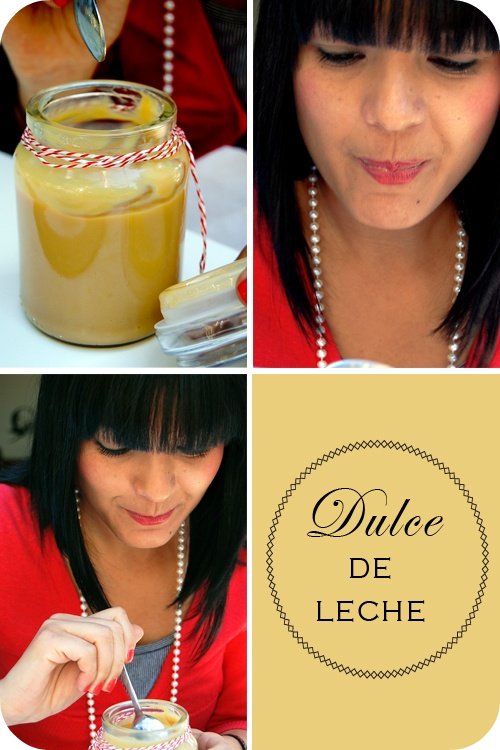
Caramel at its richest.  Slow cooked milk and sugar produces the stickiest, creamiest and more-ish caramel treat. Eat straight from the jar or on bread, sweet biscuits or any accompaniment. Highly likely to be consumed within 24 hours.   { Recipe here … }

clear copy

brioche:: Brioche Tart with Caramelised Fruits ::
This egg rich bread is filled with creamy custard, topped with a tangy sabayon sauce, and served with caramel poached fruits.  Enjoy as a sweet weekend breakfast alternative to the typical pancake or waffle options.  { Recipe here … }

dulce de leche KC

I brace myself as I present the caramel.  A jar of homemade Dulce de Leche to my dear friend, Ms Contreras.  I apprehensively push the jar across the table towards her.  She eyes it eagerly.  My nerves grow as I fear disappointment.  I do not want this to be the second worst day of her life!

She promptly opens the jar, and, with spoon clutched in hand, lingers momentarily.  I almost slap both hands over my face in anticipation.  I fretfully watch as she scoops up a dollop of the Dulce de Leche, and quickly tastes.

And then it happened.  Immediately.  With just one spoonful.

Ms Contreras was instantly transported back to Chile.

To the lush and green surroundings of her childhood town of Talca.  The tree lined streets. The rolling hills.  To the four-hour train journey between Talca and Santiago she regularly took to visit family.  To the joy of the train stopping during the trip in the town Curicó.  To watching hundreds of charming old ladies dressed in white, selling Tortas de Curicó (pastry and caramel treat), to passengers on the train.

To the hustle and bustle of Santiago.  To the memory of standing at one of her favourite spots, the Plaza de Armas, surrounded by trees, statues and fountains.  To the imposing and majestic Andes looming in the background.  To the sound of Salsa and Cumbia from performers nearby.  To the memory of onlookers slowly moving their hips to the beat of this seductive Latin rhythm.

To the cheerful and sunny seaside retreat of Valparaiso.  To the colourful scenery of pastel buildings clinging to the steep hills.  To the charming art and antique markets full to the brim with treasures.  To happy chatter of families holidaying echoing in the distance.

To her grandmother’s kitchen.  To the memories of her lovingly making Torta de manjar (sponge cake filled with caramel and liquor and covered in caramel and nuts) and Pastel mil ojas (thin layers of pastry with rich caramel filling) for the family.  To recollections of helping her grandmother in the kitchen, watching, learning – and licking her mixing bowls and spoons after she was finished!

To the memory of so many special moments.

To the realisation that caramel takes her back there….

Then Ms Contreras is back, with me.

Back at Piaf, South Bank in Brisbane.  Fashioning a smile on her face that you could not mistake.  Seeing that smile I am reminded of why I bake – and my priceless reward.  What a privilege for me to share these special memories.

Dulce de Leche

Dulce de Leche is very similar to Confiture du Lait (milk jam).  I experimented making this caramel sauce based on these two variations.  P.S. There is no dangerous boiling of cans involved!

{ Dulce de Leche }

* Ingredients *
2 cans of sweetened condensed milk

* Directions *
Empty the condensed milk into an ovenproof bowl.  Generously cover with foil.  Put the bowl into a baking dish, and in a similar way to baking cheesecake, fill the tin up with hot water so it covers the condensed milk.  Bake for 1 ¼ hours at 200C or 400F.  Check the oven every 20-30 minutes to ensure the water levels do not drop.  The condensed milk should have turned a golden, brown colour when it is ready.  Remove from the oven and allow to cool.

{ Confiture du Lait }

* Ingredients *
600ml or 1 pint whole milk
250g or 1 1/3 cups sugar
Vanilla, optional

* Directions *
Add the milk and sugar to a heavy saucepan.  Add the vanilla, if using.  Bring to the boil stirring the mixture constantly.  Turn the heat down to a very low simmer, and cook for 2 ½ to 3 hours.  The caramel is ready when you have reached a golden, brown colour and thick consistency.  Remove from the stove and allow to cool.

Salted caramel macarons single

The 2009 October Daring Bakers’ challenge was brought to us by Ami S.  She chose macarons from Claudia Fleming’s The Last Course: The Desserts of Gramercy Tavern as the challenge recipe.

Imagine my joy when I read those words.

As many of you know, I adore French macarons.  I have experimented with countless flavours and tweaked my own recipe to the point of almost being foolproof.  As I am promoting caramel month, there was no question what flavour I would make.  The challenge for me, however, was trialing a new French macaron recipe.

I hesitated for a while.  Then quickly decided it was ‘acceptable’, as Gramercy Tavern was the location of the first dinner Mr Mélanger and I enjoyed during our visit to New York last year. 

I am sentimental like that.

Salted caramel macarons

{ French Macarons } from Claudia Fleming’s The Last Course: The Desserts of Gramercy Tavern

* Ingredients *
Confectioners’ (Icing) sugar: 2 ¼ cups (225 g, 8 oz.)
Almond flour: 2 cups (190 g, 6.7 oz.)
Granulated sugar: 2 tablespoons (25 g , .88 oz.)
Egg whites: 5 (Have at room temperature)

* Directions *
1. Preheat the oven to 200°F (93°C). Combine the confectioners’ sugar and almond flour in a medium bowl. If grinding your own nuts, combine nuts and a cup of confectioners’ sugar in the bowl of a food processor and grind until nuts are very fine and powdery.
2. Beat the egg whites in the clean dry bowl of a stand mixer until they hold soft peaks. Slowly add the granulated sugar and beat until the mixture holds stiff peaks.
3. Sift a third of the almond flour mixture into the meringue and fold gently to combine. If you are planning on adding zest or other flavourings to the batter, now is the time. Sift in the remaining almond flour in two batches. Be gentle! Don’t over fold, but fully incorporate your ingredients.
4. Spoon the mixture into a pastry bag fitted with a plain half-inch tip (Ateco #806). You can also use a Ziploc bag with a corner cut off. It’s easiest to fill your bag if you stand it up in a tall glass and fold the top down before spooning in the batter.
5. Pipe one-inch-sized (2.5 cm) mounds of batter onto baking sheets lined with nonstick liners (or parchment paper).
6. Bake the macaroon for 5 minutes. Remove the pan from the oven and raise the temperature to 375°F (190°C). Once the oven is up to temperature, put the pans back in the oven and bake for an additional 7 to 8 minutes, or lightly coloured.
7. Cool on a rack before filling.

{ Caramel Fleur de sel }

* Ingredients *
¾ cup sugar
¼ cup water
1 vanilla pod
200g cream
Big pinch fleur de sel
125g or 1 stick unsalted butter, cubed

* Directions *
Place the sugar in a saucepan with the water.  Without stirring, cook the sugar to 160C or 320F until it takes on a light, golden colour.  Remove the saucepan from the heat and stir in the vanilla.  Add in the cream being careful as you poor into the hot sugar.  Add in the Fleur de sel.  Allow the mixture to cool to around 40C or 105F then add the butter.  Blend until you have a glossy paste.  Chill until required.

Brioche tart sinle

I could smell the sweet scent well before I saw them.  As I walked closer, the perfume became much stronger.  Then, they were upon me.  My eyes quickly darted from side to side to take them all in.  Row upon row of fuzzy little peaches.  With a smile I reflect to myself, summer is almost here.

I usually avoid buying stone fruit this early in the season.  Inevitably, I am disappointed from the very first bite.  Too tart.  Too tasteless.  Too dry.  But something was urging me to throw caution to the wind this day.  So I bought the peaches.

I am glad I did.  Back home, I quickly got to work preparing a caramel inspired dish to showcase this fragrant fruit.  When flipping through Baking with Julia, by Dorie Greenspan, I hit gold.  A recipe by Nancy Silverton that incorporated all the right elements for caramel month. Brioche Tart with White Secret Sauce. 

The egg rich bread is filled with creamy custard, topped with a tangy sabayon sauce, and served with caramel poached fruits.  During caramel month, I mostly have included examples of creamy and crunchy caramel, so I was keen to include the perhaps less obvious clear caramel into the mix.  The caramel poached fruit in this recipe was a simple way to feature this option.

My favourite part of this recipe – apart from the taste, of course – was the volcanic-like reaction during the sauce process when adding the wine to the caramel.  Try it, and you will see what I mean.  Oh, but be really careful.

We enjoyed this tart for a sweet weekend breakfast alternative to the typical pancake or waffle options.  It would also be a delicious dessert.  The fruit cuts the creaminess of the sauce and tart well, and would certainly be the perfect finish to a meal.

Brioche tart set

{ Brioche Tart with Caramelised Fruits } recipe adapted by Nancy Silverton from Baking with Julia by Dorie Greenspan

I made one significant change to the original recipe.  I selected to use the Brioche dough from Dorie Greenspan’s, Baking: From my Home to Yours.  I was a little short on time so this was a speedier option.  I also elected to include some dried apricots for the fruit selection to complement the aromatic peaches.

* Ingredients *
Brioche dough, chilled
1 1/2 teaspoons active dry yeast
1/3 cup whole milk, just warm to the touch
2 cups all purpose flour
3 tablespoons sugar
pinch of salt
5 tablespoons unsalted butter, melted and cooled
2 large eggs, at room temperature
1 teaspoon pure vanilla extract

Custard
1 cup creme fraiche homemade or store-bought or sour cream
1 large egg
1/3 to 1/2 cup sugar
1 large egg white, beaten
Crystal sugar, for sprinkling

Sauce
1-1/2 cups sugar
2 vanilla beans, preferably Tahitian
1/3 cup water
2-1/4 cups dry white wine
4 large egg yolks
1 cup heavy cream, whipped to soft peaks

Fruit
Assorted ripe but firm fruits, such as apricots, peaches, nectarines, and/or plums or assorted dried fruits, such as raisins, prunes, apricots, and/or peaches
Chopped toasted blanched almonds
Confectioner’s sugar

* Directions *
Put the yeast and warm milk in the bowl of a stand mixer and stir until the yeast is dissolved.  Add the rest of the ingredients to the bowl, and fit the mixer with the dough hook, if you have one.  Working on low speed, mix for a minute or two, just to get the ingredients together.  Increase the mixer speed to medium and beat for 7 – 10 minutes, stopping a few times to scrape down the bowl and the hook, until the dough is stretchy and fairly smooth.  The dough will seem fairly thin, more like a batter than a dough, and it may not be perfectly smooth – that is fine.

Transfer the dough to a clean bowl, cover with plastic wrap and leave it in a warm place until nearly doubled in size, 30 – 40 minutes.

Deflate the dough by lifting it up around the edges and letting it fall with a slap into the bowl.  Cover the bowl again with plastic wrap and put it in the refrigerator.  Slap the dough down in the bowl every 30 minutes until it stops rising, about 2 hours.  Then if you’ve got the time, leave the dough in the refrigerator overnight – it will be tastier for the wait.

Line a baking sheet with parchment paper and butter a 1-1/4-inch-high 10-inch flan ring or the ring of a 10-inch springform pan.

Gently work the dough into a ball, flatten it into a 5-inch disk, and roll it out on a lightly floured surface into a circle that’s at least 1 to 1-1/2 inches larger than the flan ring. If your circle is ragged, trim it to an even round.

Centre the flan ring on the dough and press down on the ring gently so that, when lifted, it leaves a clear impression. This impression will be your crimping guide. Keeping the fingers of your left hand (right, if you’re left-handed) against the guideline, lift a little of the dough from the edge with your right hand and fold it over so that it falls about 1/4 inch past the guideline. In this position, you should be able to pinch the dough between the index fingers of both hands and crimp it. Twist your fingers slightly and the dough will have an attractive diagonal crimp. Work your way around the tart and don’t be concerned about getting it just so-as luxurious as this custard-filled brioche will be, it is still a simple, rustic tart.

Place the flan ring on the parchment-lined baking sheet and lift the dough up and into the ring. Work your fingers around the crimped edge, pressing your fingers into the dough so that you lift up the thick, crimped edge a bit and firmly press down the base of the dough.

Let the dough rise, uncovered, at room temperature until it doubles in size, 45 minutes to 1 hour.

Centre a rack in the oven and preheat the oven to 275F.

Whisk the creme fraiche and egg together in a small bowl and keep close at hand.

Press your fingertips into the dough, covering all of the tart, except for the crimped edge, with abundant and deep dimples-don’t be afraid to press your fingers down almost to the bottom of the pan. Spread the creme fraiche mixture evenly over the bottom of the tart, going right up to where the crimping begins. Sprinkle 1/3 to 1/2 cup sugar over the custard.

You’ll know how much sugar to use because the custard will tell you-it will only absorb a certain amount. Stop when it appears that the custard won’t take any more.

Brush the crimped edge of the dough with the beaten egg white and sprinkle it with crystal sugar. Bake the tart for 30 to 40 minutes, or until the crust is golden brown and the custard is just about set. The custard should be a little loose; it should jiggle slightly when you shake the pan gently. Remove to a cooling rack. A few minutes after the tart comes from the oven, slide a cardboard cake round under the tart and lift off the ring. Serve the tart slightly warm or at room temperature, with or without the sauce and fruit garnish.

To make the caramel syrup for the sauce, put the sugar into a heavy-bottomed medium skillet with high sides or a saucepan. Split the vanilla beans, scrape the soft, pulpy seeds into the pan, and toss in the pods. Pour in the water-it should be just enough to cover the sugar-but don’t stir. Turn the heat to high and bring the mixture to the boil. Now you can either cover the pan for a couple of seconds to wash down any sugar that has crystallized on the sides of the pan or you can wash them down with a pastry brush dipped in cold water.

As the caramel continues to cook, you’ll notice that the bubbles will get bigger and shortly after that you’ll see the first sign of colour-there is always a hot spot. As soon as the caramel starts to colour, begin to swirl the skillet gently over the heat. Keep cooking and swirling frequently until the caramel is a deep gold test-test the colour by putting a drop of the caramel on a white plate. It probably will take 7 to 10 minutes to get the right colour.

When you’ve got the colour you want, immediately remove the pan from the heat and add the white wine. Stand back as you pour in the wine because the caramel will bubble and sizzle -it will also seize and harden. Return the pan to the heat and bring the syrup to the boil again to melt the caramel. Pour 1-1/2 cups of the syrup through a strainer into a heatproof measuring cup. Reserve the remaining syrup in the pan; you’ll use it to cook the fruit garnish.

Put the yolks into the bowl of a heavy-duty mixer (or use a heatproof bowl) and, whisking constantly, drizzle in the hot caramel. Put the bowl over a saucepan of boiling water-the water should not touch the bottom of the bowl-and whisk without stop until the yolks are voluminous and almost too hot for you to stand when you dip your finger into the mixture: This should take at least 5 minutes, but the yolks may need as long as 8 minutes of heat and constant stirring. (If the eggs start to cook, a bad sign, or are heating unevenly, lift the bowl out of the pan, whisk for a few seconds off the heat, and then return the bowl to the heat and continue to whisk.)

Attach the bowl to the mixer, fit the mixer with the whisk attachment (or use a hand-held mixer), and beat the yolk mixture at medium-low speed for 10 to 15 minutes, or until the mixture is cool to the touch, pale in colour, and about tripled in volume. The bottom of the bowl should feel cold and the mixture should have the look of whipped mayonnaise. Gently fold in the whipped cream. The sauce can be kept covered in the refrigerator for about 24 hours.

If you are using fresh fruits, slice them. If you are using a selection of dried fruits, dice the fruits, soak them in hot water to plump them, and then drain them. Pat them dry before using.

Bring the caramel-wine syrup to a boil in the skillet in which it was made. Add the fruit and swirl the pan. Cook the fruit, swirling the pan and stirring the fruit as needed, until the fruit is softened.

To serve, place a slice of the tart on each plate (this would be nice on largish plates). Spoon on some of the sauce and the caramel poached fruit, lifting the fruit from the skillet with a slotted spoon, and decorate the plate with a shower of toasted nuts and a dusting of confectioner’s sugar.

Although the sauce can be made ahead, and the dough must be made in advance, the tart must be served the day it is made.

Serves 8 to 10

Chocolate Salted Caramel Cupcakes

How did Fleur de sel attain such widely held admiration?  One minute it was a speciality product celebrated only by those in the know, next minute it became practically mainstream.

Like many people, I grew up with plain, old table salt. Then, over the years, I have been exposed to sea salt, kosher salt, pink salt, black salt, and Fleur de sel.  I understood the necessity of incorporating salt into baking.  But not until tasting Fleur de sel did I fully appreciate the virtues of salt – and value how extraordinarily well it enhances taste.

From the very first punch of flavour, I was sold.  Hook, line and sinker.  Sprinkled on an indulgence such as caramel or chocolate, one bite and you are simply captivated.  As the taste of the sweet starts to dissolve in your mouth, you are exposed to the light, salty overtone of the salt.  The flavour is aromatic, smooth and distinctive.

These cupcakes are no exception.

During my caramel or chocolate vote, although caramel was crowned the clear victor, there were many requests for a chocolate and caramel combination.  Chocolate and caramel is like a marriage made in heaven, and so caramel month would certainly feel incomplete without it.

All frosted up, these cupcakes are deceptive.  The generous pool of caramel remains concealed until that first, unanticipated bite.  The salted caramel harmoniously melds with the rich chocolate cake and dark chocolate frosting.  Lightly sprinkled to finish, the grey flakes, light and almost pearlised, look misleadingly innocent.  When you savour the taste, the irresistable flavour faintly lingers urging you to immediately go back for more.

With ample supply of Fleur de sel de Guérande in the pantry, I suspect there will be more baking experiments to come.

{ Chocolate Salted Caramel Cupcakes } recipe by Martha Stewart

* Ingredients *
1 1/2 cups all-purpose flour
3/4 cup unsweetened Dutch-process cocoa powder
1 1/2 cups sugar
1 1/2 teaspoons baking soda
3/4 teaspoon baking powder
3/4 teaspoon salt
2 large eggs
3/4 cup buttermilk
3 tablespoons vegetable oil
1 teaspoon pure vanilla extract
3/4 cup warm water

* Directions *
Preheat the oven to 180C or 350F. Line mini muffin tin with paper liners. Whisk together flour, cocoa, sugar, baking soda, baking powder, and salt. With mixer on low speed, add eggs, buttermilk, oil, extract, and the water; beat until smooth and combined.

Spoon the batter into liners about two-thirds full. Bake approximately 15 minutes, or until tester comes out clean. Transfer tins to wire racks and allow to cool for 10 minutes; turn cupcakes onto racks and let cool completely. Cupcakes can be stored overnight at room temperature, or frozen up to 1 month in air tight containers.

To finish, use a paring knife to cut a cone-shaped piece (about 1/2 inch deep) from the centre of each cupcake and throw away the pieces. Spoon 1 to 2 teaspoons warm Salted Caramel Filling into each hollowed-out cupcake. You will notice the caramel will sink into the cupcake a little, just fill it up a bit more. Sprinkle a pinch of salt over filling.

Use a pastry bag with a medium open-star tip and pipe Dark Chocolate Frosting onto each cupcake, swirling tip and releasing as you pull up to form a peak. Garnish each cupcake with a pinch of salt. Cupcakes are best eaten the day they are filled and frosted. Store at room temperature in airtight containers.

Salted Caramel Filling

* Ingredients *
2 1/2 cups sugar
2/3 cup water
1 tablespoon light corn syrup
3/4 cup heavy whipping cream
2 1/2 teaspoons sea salt, preferably fleur de sel

* Directions *
Heat sugar with the water and corn syrup in a heavy saucepan over high, stirring occasionally, until syrup is clear; clip a candy thermometer to side of pan and stop stirring.

Cook until syrup comes to a boil, washing down sides of pan with a wet pastry brush as needed. Boil, gently swirling pan occasionally, until mixture is caramelised and just reaches 185C or 360F. Remove from heat and slowly pour in cream; stir with a wooden spoon until smooth. Stir in salt.

Use immediately; if caramel begins to harden reheat gently until pourable.

Dark Chocolate Frosting

* Ingredients *
1/2 cup plus 1 tablespoon unsweetened Dutch-process cocoa powder
1/2 cup plus 1 tablespoon boiling water
2 1/4 cups (4 1/2 sticks) unsalted butter, room temperature
3/4 cup confectioners’ sugar, sifted
1/4 teaspoon salt
1 1/2 pounds best-quality semi-sweet chocolate, melted and cooled

* Directions *
Combine cocoa and boiling water, stirring until cocoa has dissolved.

With electric mixer on medium-high, beat butter, confectioners’ sugar, and salt until pale and fluffy. Reduce speed to low. Add melted and cooled chocolate, beating until combined and scraping down sides of bowl as needed. Beat in the cocoa mixture.

Frosting can be refrigerated up to 5 days, or frozen up to 1 month in an air tight container. Before using, bring to room temperature and beat on low speed until smooth again.

Next Page »